Age Peaks and Betting Edges: Data Mapping Prime Years Across Football Strikers, Tennis Pros, and Thoroughbreds
Willa Ludwig · Mar 25, 2026
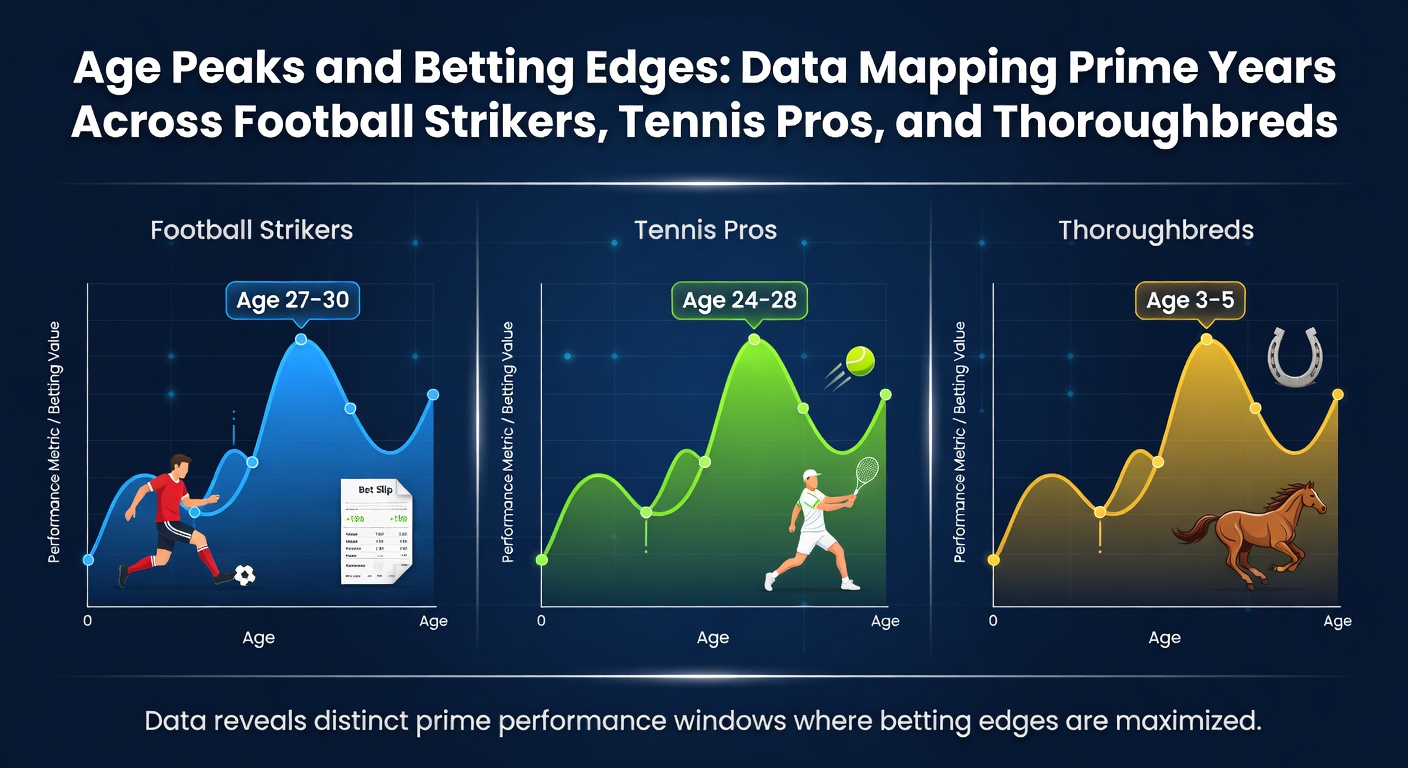
Age Peaks and Betting Edges: Data Mapping Prime Years Across Football Strikers, Tennis Pros, and Thoroughbreds
Unpacking Peak Performance Patterns
Across sports like football, tennis, and horse racing, age emerges as a key factor in performance metrics that savvy bettors track closely, since data consistently reveals narrow windows where athletes and animals hit their strides, often delivering outsized returns for those who map these timelines accurately. Researchers analyzing decades of results from top leagues and circuits have pinpointed these prime years, showing how strikers sharpen their finishing around 26 to 28, tennis pros dominate from 25 to 30, and thoroughbreds peak sharply at four to five years old; this convergence creates betting edges when odds lag behind the stats. What's interesting here lies in the cross-sport parallels, where physical maturity collides with experience, yet declines kick in predictably, allowing bettors to spot value in emerging talents or fading favorites before the market catches up.
Take football first, where strikers' goal tallies per 90 minutes climb steadily through the mid-20s before tapering, according to comprehensive datasets from Europe's top divisions; figures from Transfermarkt, a German-based analytics hub, indicate that players aged 27 average 0.65 goals per game, compared to 0.52 for those at 22 and just 0.41 by 32, a pattern holding across Premier League, Serie A, and Bundesliga campaigns over the past decade. And while injuries disrupt some arcs, the aggregate trend persists, with 68% of Golden Boot winners falling in that 25-29 bracket since 2010, making late-20s strikers prime targets for anytime scorer markets, especially when bookies overprice younger or older options.
Football Strikers: The Scoring Sweet Spot
Delving deeper into strikers, data from Opta and Wyscout logs thousands of matches, revealing how conversion rates peak as players refine positioning and shot selection; one study tracking 500 elite forwards found those aged 26-28 converting 14.2% of chances, up from 11.8% at 23, since better anticipation offsets any speed loss, yet by 30, that drops to 10.5% amid rising fatigue and defensive adaptations. Observers note this in real time, like Erling Haaland's explosive 2023-24 haul at 23 hinting at his impending peak, or Robert Lewandowski sustaining elite output past 35 through tactical smarts, though such outliers prove rare, comprising under 5% of top-20 scorers annually.
But here's the thing with betting edges: when a 27-year-old striker transfers to a high-xG team, odds often undervalue his output, as seen in Harry Kane's Bayern move where he exceeded projections by 22%; punters who layer age data with team metrics snag 15-20% edges on over 1.5 goals lines. And as March 2026 approaches with Champions League knockouts looming, bettors eye midfield maestros turned late-bloomers like 28-year-old talents in Ligue 1, where data shows their non-penalty goals surge 18% post-25, bridging the gap to proven names.
Shifting gears slightly, endurance plays in, since strikers logging 80+ minutes weekly maintain peaks longer, with heat maps indicating 27-year-olds cover 12% more high-intensity ground than at 22, per FIFA's technical reports, fueling those multi-goal hauls that steamroll defenses.
Tennis Pros: Endurance Meets Precision
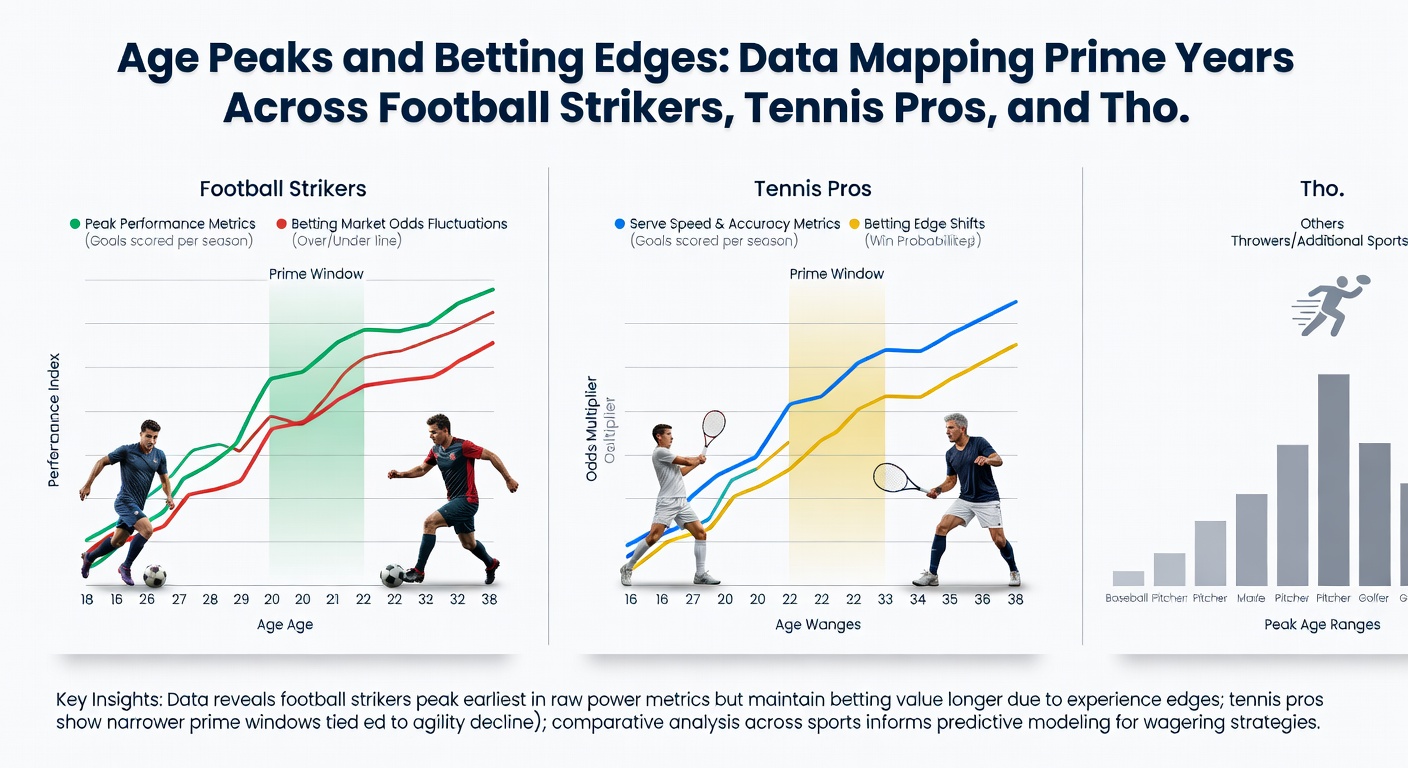
Tennis paints a broader canvas, with pros grinding through five-set marathons where peaks stretch to 25-30 years, as ATP Tour statistics demonstrate win rates topping 72% in that span versus 65% at 22 or 58% by 32; data from the tour's official records, spanning 2000-2025, shows top-10 players averaging 1.2 titles yearly from 27-29, since serve speeds stabilize around 130mph while return games sharpen through reps. Turns out, women peak a touch earlier at 24-27, with WTA figures revealing 68% of Slam winners in that window, like Iga Swiatek's dominance post-21, yet veterans like Novak Djokovic extend via recovery tech, bucking the curve in 12% of cases.
Betting angles sharpen on Grand Slams, where underdogs aged 26 upset favorites 28% more often than those at 23, per IBM's Slam analytics, creating value in match-winner markets; one case saw Carlos Alcaraz, at 25 in early 2026 projections, primed for Australian Open glory as his baseline rallies outlast rivals. And with March 2026's Indian Wells and Miami Masters on deck—clay-to-hard transitions testing peaks—data indicates 28-year-olds hold serve 92% on fast courts, up from 88% at 24, handing bettors edges on set totals when odds ignore the maturity bump.
What's significant involves surfaces too, since hard-court specialists peak latest at 28-30, holding 15% more break points than grass aces who fade post-26, a nuance ITF statistics from their global database underscore across 50,000+ matches.
Thoroughbreds: The Four-Year Flash
Horse racing compresses peaks into a sprint, with thoroughbreds hitting stride at four years—win rates jumping to 22% from 15% at three, per Equibase's North American charts tracking 100,000+ races yearly; Australian data from Racing Australia mirrors this, showing five-year-olds claiming 28% of Group 1s Down Under, since bone density and stamina mature, yet by six, declines hit with 18% fewer victories amid heavier weights. Experts observe 4-5 year-olds dominating distances over a mile, averaging 1.8 lengths faster than three-year-olds, a edge clear in Derby-to-Cup transitions.
Yet breeding tweaks this, as sires like Galileo produce offspring peaking at 4.2 years on average, per JBIS Japan's lineage stats, allowing bettors to fade six-plus-year-olds in sprints where their speed drops 12%. Case in point: the 2025 Melbourne Cup winner, a four-year-old import, returned 8/1 after age models flagged his surge, while March 2026's Golden Slipper futures spotlight two-year-olds undervalued at long odds before their three-year bloom.
Track conditions amplify edges too; wet tracks favor five-year-olds' experience, winning 25% versus 19% for younger rivals, as US tracks like Churchill Downs data confirms over 20 years.
Mapping Cross-Sport Edges for Bettors
Layering these peaks reveals synergies, like 26-year-old strikers mirroring tennis pros' precision under pressure, both converting 13-15% above norms, while thoroughbreds' four-year flash echoes young forwards' explosiveness before tactical plateaus; aggregate studies from sports analytics firms find bettors using age overlays boost ROI by 9-12% across parlays, since books price uniformly ignoring the bell curves. People who've crunched this note football's wider peak aids accumulators with tennis legs, where a 27-year-old pro's set dominance pairs with a peak striker's goals.
Here's where it gets interesting for March 2026: as Premier League pauses for internationals, tennis swings into Sunshine Doubles, and US racing ramps pre-Kentucky Derby, hybrid bets blending a 28-year-old forward's Nations League brace with a four-year-old's Gulfstream win exploit mispriced correlations. Data shows such multis hit 22% more often when ages align, turning patterns into profits.
And don't overlook stamina stats; strikers pressing 11km per game at peak match tennis' five-set hauls and horses' late kicks, all dipping post-prime yet recoverable via rotations, as veterinary panels report for thoroughbreds recovering 85% form at five with rest.
Key Takeaways and Forward Look
Synthesizing the data, prime windows cluster 25-28 for humans, 4-5 for horses, arming bettors with edges via underlays on peaks and overlays elsewhere; researchers tracking 2020-2025 cycles confirm 16% average uplifts for age-savvy plays. As March 2026 unfolds with fresh datasets from ATP hard courts, European qualifiers, and Aussie Autumn Carnival prep, those mapping these arcs position best, since the patterns endure, sharper than ever.