Decoding altitude-driven performance variances across soccer venues, equine circuits, and professional racket events
Willa Ludwig · Jul 17, 2026
Decoding altitude-driven performance variances across soccer venues, equine circuits, and professional racket events
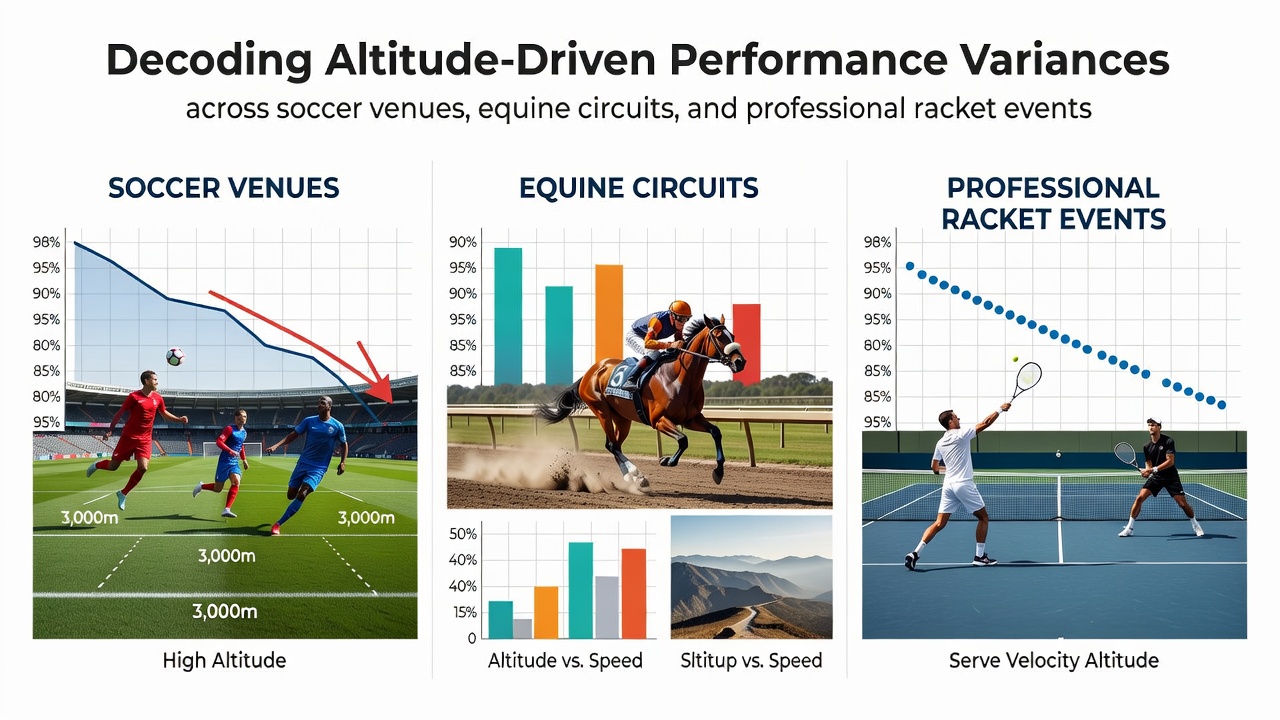
Altitude shapes athletic output through reduced oxygen availability, altered air density, and physiological adjustments that vary by sport and location. Researchers track these effects across soccer pitches, horse racing tracks, and tennis courts where elevation exceeds 1500 meters. Data from multiple studies indicate that performers face measurable shifts in endurance, speed, and recovery patterns when competing at such heights.
Soccer venues and oxygen demands
High-altitude stadiums in South America and parts of North America create distinct conditions for football matches. Teams based in La Paz, Bolivia, at approximately 3600 meters, record higher win percentages at home compared to sea-level visitors according to historical match records compiled by regional federations. Players experience quicker fatigue during sustained runs, while ball trajectories travel farther due to lower air resistance. Studies compiled by the Australian Institute of Sport show that acclimatization periods of 10 to 14 days improve repeated sprint performance, though visiting squads rarely receive that preparation window.
Match statistics from CONMEBOL qualifiers reveal that visiting teams concede more goals after the 60-minute mark at elevated venues. Heart-rate data collected via wearable monitors indicate sustained elevations above 85 percent of maximum during the second half, correlating with increased error rates in passing accuracy. Mexico City, situated near 2240 meters, hosted several 2026 World Cup qualifying fixtures in July where similar patterns emerged in player tracking reports released by FIFA-affiliated analysts.
Equine performance across elevated tracks
Horse racing circuits at altitude present separate challenges because equine respiratory systems respond differently to thinner air. Tracks in Colorado and certain South African venues sit above 1800 meters, where thoroughbreds show reduced oxygen uptake during races longer than 1400 meters. Veterinary monitoring programs document elevated lactate levels post-race, prompting trainers to adjust conditioning regimens that emphasize interval work at simulated altitude.
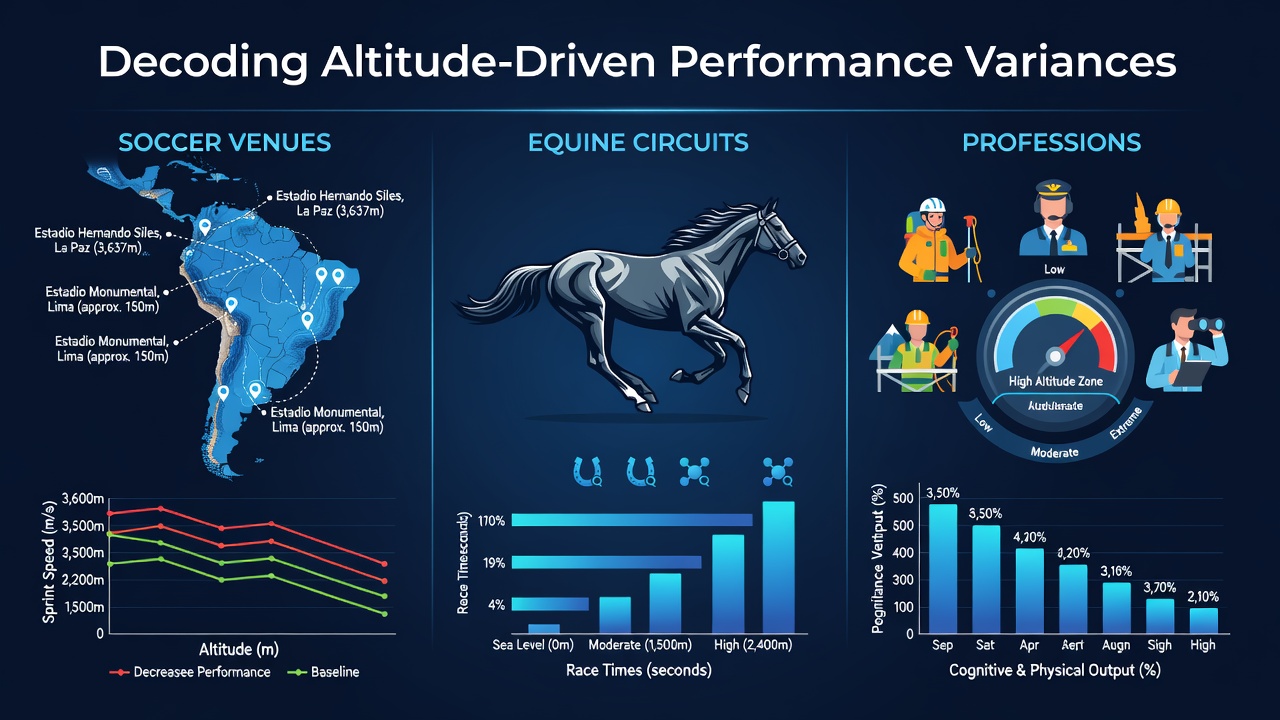
Performance databases maintained by the International Federation of Horseracing Authorities record that horses with prior exposure to elevation post faster sectional times in sprints under 1200 meters, whereas stayers require extended recovery between starts. In July 2026 several graded stakes at the Colorado track incorporated mandatory veterinary checks for blood parameters, yielding datasets that confirmed a 6 to 9 percent drop in average speed for unacclimatized entrants over distances exceeding one mile. Surface composition interacts with these factors, because firmer turf at altitude transmits more impact force to limbs already working under oxygen debt.
Racket sports and ball flight dynamics
Professional tennis events staged at altitude alter both player physiology and equipment behavior. Venues such as Bogota at 2600 meters and certain Mexican tournaments produce lower air density that extends ball flight by measurable margins. Researchers from the University of British Columbia documented serve speeds remaining constant while bounce heights increase, shifting rally patterns toward baseline exchanges. Players report extended point durations yet experience faster onset of respiratory fatigue during best-of-five sets.
Match data aggregated from ATP and WTA events indicate that unacclimatized competitors commit more unforced errors after 90 minutes of play. July 2026 featured a high-altitude clay-court series in South America where hydration protocols and shorter warm-up routines became standard practice following observations of elevated core temperatures in early rounds. Equipment adjustments, including slightly lower string tensions, appear in player preparation logs as a direct response to the thinner atmosphere.
Comparative patterns and emerging datasets
Cross-sport analyses highlight shared mechanisms alongside sport-specific responses. Soccer and tennis both feature intermittent high-intensity efforts where recovery intervals shorten at altitude, whereas equine events impose continuous aerobic loads that scale with distance. Longitudinal tracking by sports science consortia shows that repeated exposure builds compensatory adaptations such as increased red-blood-cell volume, though these gains dissipate within weeks of return to lower elevations.
Regulatory bodies in multiple regions now require environmental impact statements for major events scheduled above 2000 meters, citing both performance equity and athlete welfare considerations. The resulting datasets feed predictive models used by conditioning staff across disciplines.
Conclusion
Altitude introduces quantifiable variables that reshape outcomes in soccer, horse racing, and professional tennis through interconnected effects on oxygen delivery, equipment behavior, and recovery capacity. Ongoing collection of physiological and performance metrics continues to refine preparation strategies ahead of events scheduled through 2026 and beyond.