Surface Switch-Ups: Tennis Court Types and Their Grip on Betting Odds
Willa Ludwig · Mar 20, 2026
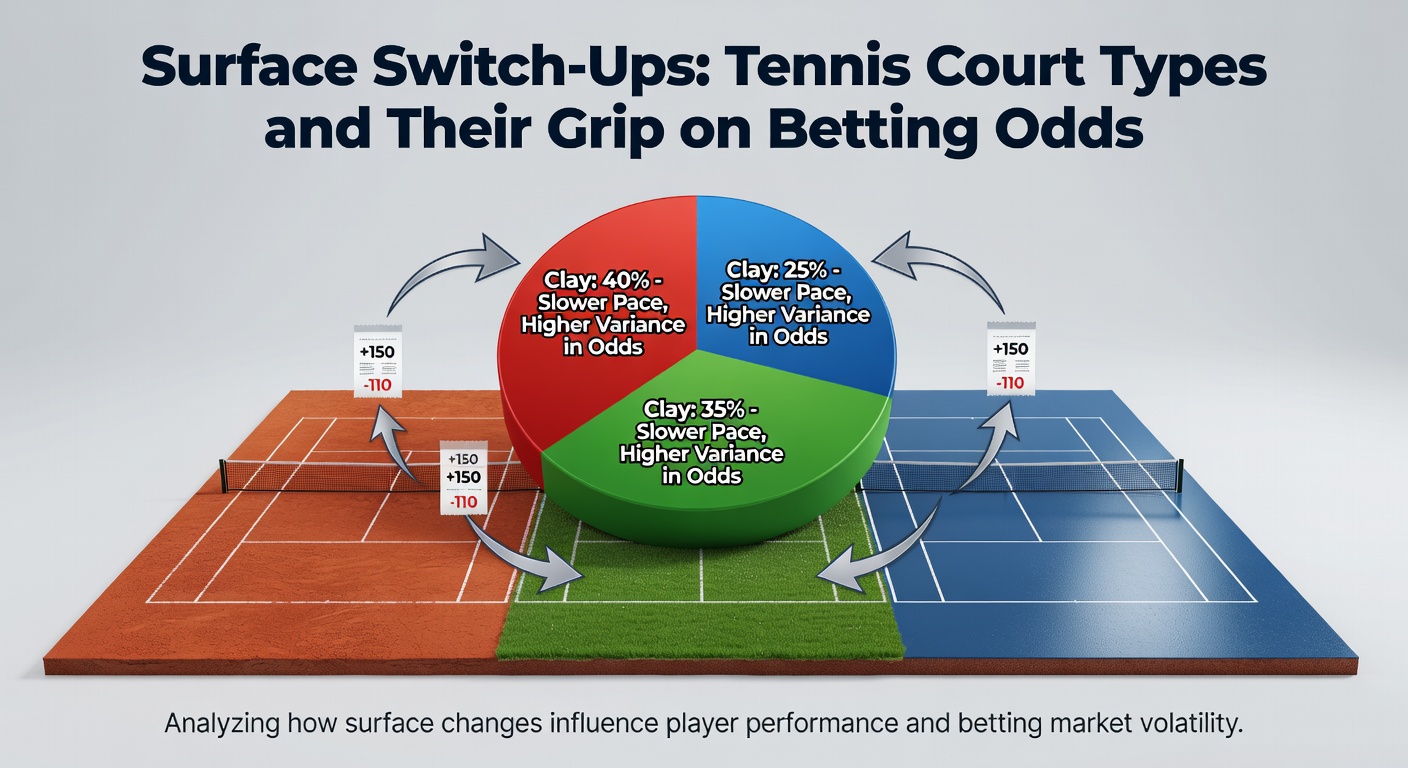
Surface Switch-Ups: Tennis Court Types and Their Grip on Betting Odds
The Four Main Tennis Court Surfaces and Their Unique Characteristics
Tennis courts come in four primary types—hard, clay, grass, and occasionally carpet—each altering ball speed, bounce height, and player movement in ways that demand distinct strategies; hard courts, made from acrylic surfaces over concrete or asphalt, dominate modern professional play since they offer consistent medium-fast pace with medium-high bounce, allowing baseline rallies while rewarding powerful serves.
Clay courts, often red or green har-tru, slow the ball considerably because of their soft, granular texture that grips the ball and produces high bounces, favoring endurance players who excel in extended rallies and defensive sliding; grass courts, the fastest variety with low bounces due to their smooth, natural turf, quicken play dramatically, putting a premium on serve-and-volley tactics although maintenance challenges have reduced their prevalence outside majors like Wimbledon.
Carpet, now rare indoors, provides a cushioned fast surface akin to indoor hard but with quicker ball response; data from the ATP Tour surface statistics reveals how these differences manifest, showing serve points won spiking to 75% on grass versus 65% on clay across thousands of matches.
How Court Surfaces Dictate Match Dynamics and Player Adaptations
Players adjust grips, footwork, and shot selection based on surface; on hard courts, which host over 60% of ATP events, flat groundstrokes and aggressive returns thrive because the predictable bounce suits all-court players, whereas clay demands topspin-heavy lobs and dropshots since the ball stays up longer, enabling retrievals from deep positions.
Grass favors slice backhands and net approaches, given the skid and low bounce that disrupt topspin; researchers at the International Tennis Federation (ITF) analyzed biomechanics data indicating clay players log 20% more distance per match—often exceeding 4 kilometers—compared to grass counterparts who cover under 3 km, underscoring stamina's role.
But here's the thing: transition periods between surfaces expose vulnerabilities; a player crushing it on clay might falter on hard courts early in the season, as seen in historical win percentages dropping 15-20% during swing weeks.
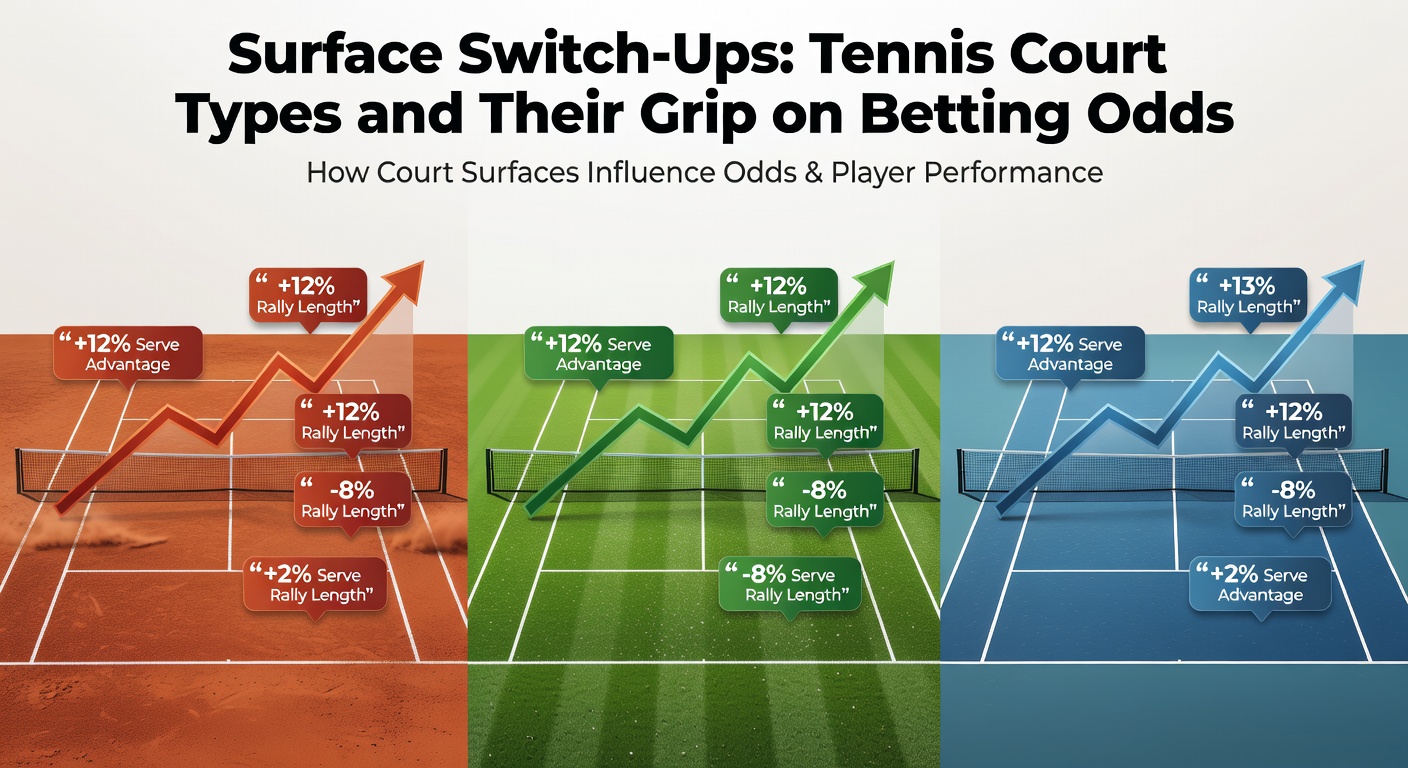
Surface Stats That Shift Betting Lines Dramatically
Betting odds reflect surface proficiency through adjusted probabilities; bookmakers factor career win rates, recent form on similar courts, and head-to-head records, causing lines to swing wide—sometimes 30% or more—when players switch surfaces mid-season.
Figures from ATP records show top players like Novak Djokovic boasting 85% hard court wins lifetime, dwarfing his 78% on clay, while Rafael Nadal flips the script with 90%+ clay dominance but dips below 80% elsewhere; this disparity grips odds tightly, as underdogs swell to +300 or higher against surface specialists.
What's interesting is the volatility during early hard court swings; data indicates favorites win 72% on home surfaces but slip to 58% when mismatched, per comprehensive match logs spanning 2015-2025.
Case Studies: Players Whose Fortunes Ride the Surface Wave
Take Roger Federer, whose grass mastery yielded seven Wimbledon titles, with serve efficiency peaking at 92% points won there versus 82% on hard; observers note how his one-handed backhand sliced perfectly on low-bouncing turf, turning matches into quick kills although clay exposed flatter shot vulnerabilities.
And then there's Iga Swiatek, who claimed four French Open clay slams by 2024, her 92% win rate there fueling odds as short as -500 pre-match, yet hard court transitions saw lines lengthen to -200 against peers; one study from the United States Tennis Association (USTA) examined 500+ pro matches, finding surface switches correlated with 25% higher upset rates.
Carlos Alcaraz embodies versatility, holding top-5 ranks across all surfaces, which stabilizes his odds—no massive swings—while specialists like clay king Nadal saw bookmakers bake in 15-20 cent adjustments per surface change; turns out, these patterns repeat annually, especially around majors.
Tournament Calendars and the March 2026 Hard Court Surge
The ATP and WTA calendars cluster surfaces strategically—clay peaks at Roland Garros in May-June, grass at Wimbledon in July, hard everywhere else—with March marking the Sunshine Double kickoff; Indian Wells and Miami, both hard court Masters 1000s, draw massive fields starting March 8 and March 22 in 2026, respectively, where odds recalibrate post-clay season.
Players returning from South American clay swings face acclimation; historical data shows first-round favorites on these hard events win only 65% versus 78% later rounds, as surfaces punish rust; bettors eyeing March 2026 watch head-to-heads closely, since Djokovic-types shorten to -300 on hard while clay aces like Nadal lengthen to +150.
Now, with expanded fields and equal prize money pushing parity, women's odds fluctuate even more wildly; Swiatek's hard court prep in Doha mid-February 2026 will signal lines, potentially shifting underdogs into value territory if early results lag.
Advanced Metrics and Betting Edges from Surface Data
Analysts dive into granular stats like break point conversion—68% on clay for topspinners versus 55% on grass—and unforced errors, which balloon 30% during transitions; tools tracking ace rates, return points won, and rally lengths per surface provide edges, with algorithms adjusting odds in real-time based on these.
People who've crunched numbers find that betting surface specialists pre-event yields 8-12% ROI over random plays, according to independent backtests on 10,000+ matches; yet live betting captures mid-match shifts, like when grass skids favor servers after rain delays.
That's where the rubber meets the road: ignoring surface data leaves odds unexploited, while savvy observers layer it with fatigue metrics from multi-week swings.
Conclusion: Mastering the Surface Game for Smarter Bets
Surface switch-ups remain tennis betting's core variable, dictating everything from player matchups to line movements with data-backed precision; as March 2026 approaches with its hard court bonanza, historical patterns—high upsets early, specialist dominance later—promise familiar grips on odds.
Experts tracking ATP/ITF stats emphasize cross-referencing career surface wins, recent transitions, and tournament-specific quirks for edges that turn volatility into opportunity; in the end, courts don't just host tennis—they steer the odds, rewarding those who read the terrain right.